Complete Value Guide · 2026 Edition
A superb gem MS67+ Rounded Bust sold for $52,800 at Heritage Auctions in 2019 — yet a worn example might fetch only $15. Your coin's variety and condition make all the difference. This guide covers everything: Pointed Bust vs Rounded Bust, DDO errors, Repunched Dates, grading, and where to sell.
Pointed Bust Check
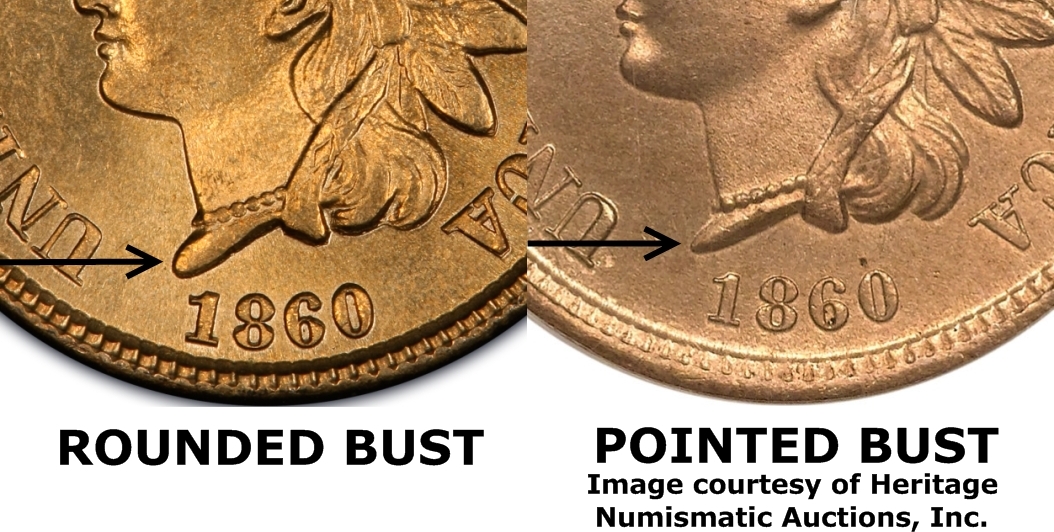
The Pointed Bust variety (Type I) represents roughly 5% of the 1860 mintage and commands premiums of 20–150% over the common Rounded Bust. Use this checker to identify yours. Image1 below shows the primary diagnostic area.
Check all that apply to your coin:
Detailed Assessment
Describe what you see and our analyzer will flag potential varieties, estimate value range, and suggest next steps. The more detail you provide, the better.
The Self-Checker and Describe tools identify your variety — but the Calculator below maps your exact mint, condition, and error combination to a dollar range instantly.
Use the Value Calculator →Free Instant Tool
Answer three quick questions below. The calculator maps your variety + condition + errors to a real-market dollar range based on PCGS and Heritage Auctions data.
If you're not yet sure which variety you have or don't know your coin's condition, there's a free 1860 Indian Head Penny Coin Value Checker with photo upload that can help identify your coin's key features from a photo before you run this calculator.
Jump to any section:
Complete Variety Reference
The 1860 Indian Head cent is a variety collector's playground. Two distinct obverse hub types, multiple Repunched Dates cataloged by Rick Snow, a confirmed Doubled Die Obverse, and several scarce die-oddity varieties make this one of the most studied copper-nickel cents in the series. The five most collectible varieties are detailed below.
The Pointed Bust is the single most significant variety in the 1860 Indian Head cent series. It was produced from carry-over working dies originally prepared in 1859, which Philadelphia Mint workers dated 1860 and put into service at the start of the year's production run. These Type I dies used the original Longacre hub design in which the base of the Indian Queen's neck tapers to a sharp, narrow point.
Sometime during 1860, the Mint transitioned to a redesigned hub with a thicker, more rounded neck terminus — creating what collectors call the Rounded Bust or Type II. Researcher Rick Snow identified seven distinct Pointed Bust obverse dies and estimated that approximately 5% of the total 20,566,000 mintage carries this design, implying roughly one million Pointed Bust coins were struck.
PCGS population data indicates the Pointed Bust is about six times scarcer than the Rounded Bust in equivalent grades. In high mint state — MS65 and above — PCGS estimated fewer than 50 examples survive, making the Pointed Bust a true condition rarity. The auction record for this variety stands at $32,900, achieved by an MS67 example at Heritage Auctions in February 2014.
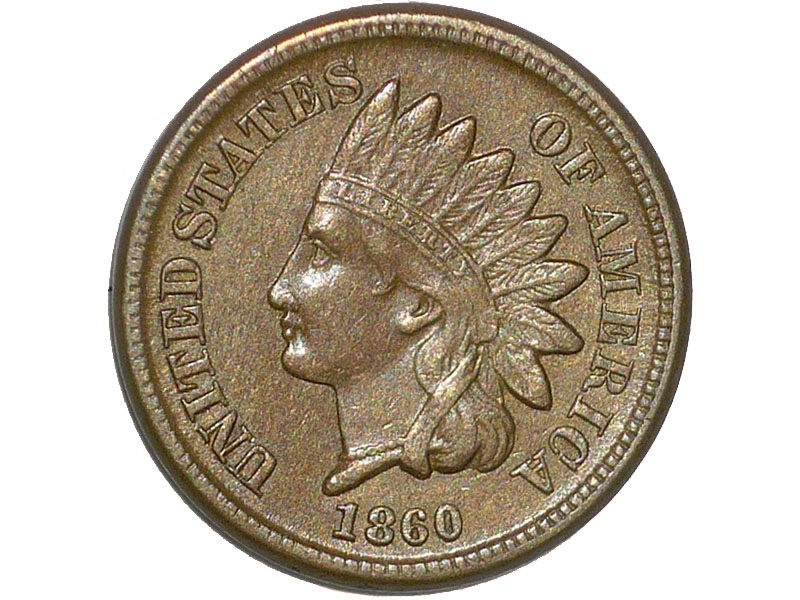
The Snow-5 Doubled Die Obverse is the most widely recognized and collectible error variety among the Rounded Bust 1860 Indian cents. It was created when a working die received two separate hub impressions that were not perfectly aligned — a process known as hub doubling or mechanical doubling at the die preparation stage. The die was then used in production without correction, imparting the doubled impression onto every coin it struck.
The doubling manifests most clearly on the first four letters of LIBERTY inscribed on the headdress ribbon: L, I, B, and E each show a secondary impression offset slightly from the primary. With a 10× loupe, the effect is unmistakable — look for the second set of letter serifs slightly separated from the main letters. A secondary diagnostic feature is a flattened, slightly depressed area in the field adjacent to the ICA portion of AMERICA on the obverse.
The Snow-5 DDO is cataloged as DDO-001 in the Rick Snow attribution system for Indian cents and is documented in the CONECA Master Doubled Die Files. Because the doubling is visible with modest magnification on problem-free examples, this variety has become popular with cherry-pickers searching dealer bins and coin shows. Premium over a plain Rounded Bust example typically runs 50–100% in circulated grades, with more dramatic premiums on gem uncirculated pieces where luster and surface preservation amplify the visibility of the doubled letters.
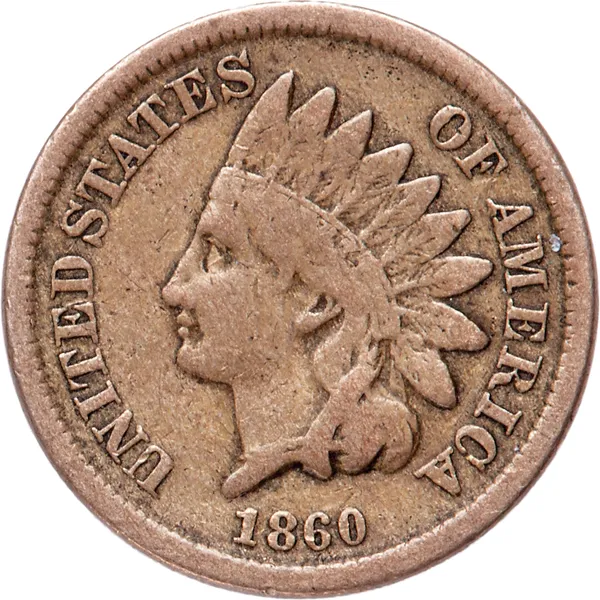
The Snow-6 variety, nicknamed the "Toothpick" by collectors, is one of the scarcest diagnostically fascinating die varieties in the entire 1860 Indian cent series. It is rated Very Rare on the Universal Rarity Scale (URS-9), which translates to an estimated 35–75 surviving examples — a tiny fraction of the 20.5 million coins originally struck. The primary diagnostic is a sharp, prominent raised die line that extends from the mouth area (Liberty's lips) outward across the cheek field, resembling a toothpick protruding from the figure's mouth.
This die line is a struck-in feature — not a post-mint scratch. It was caused by a groove or file mark on the obverse working die itself, which transferred as a raised line onto every coin the die produced before it was retired. The line is visible to the naked eye on higher-grade examples and is confirmed under any magnification. A second diagnostic feature — a small die chip on the top left corner of the reverse shield — provides additional confirmation and helps distinguish this variety from coincidental scratches on post-mint damaged coins.
Because of its Very Rare rating and the dramatic visual impact of the "toothpick" line, this variety commands premiums well above standard Rounded Bust examples across all grade levels. Circulated examples in VF–AU condition have sold in the $75–$300 range, while gem uncirculated specimens, when they appear, attract serious specialist interest. Collectors should submit suspected Snow-6 examples to PCGS or NGC for authentication before paying a significant premium.
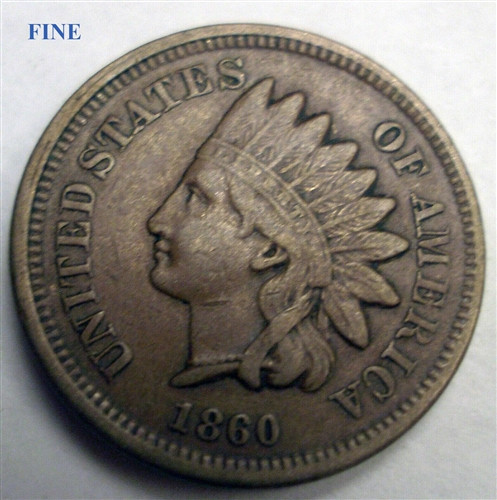
Repunched Date varieties occur when the date digits were entered into the working die using individual date punches, and one or more punches was driven in slightly out of position before being corrected and repunched in the proper location. The underlying first impression remains visible on the finished coin as a "ghost" digit or partial digit impression slightly offset from the final position. The Snow-1 is a Pointed Bust (Type I) variety where the digit 1 in the date shows a clear secondary impression to the south (below) the final date position, paired with a Broken R in AMERICA — one of the few working hub deterioration diagnostics documented for the Type I obverse dies.
The RPD varieties for 1860 cents are extensively cataloged in Rick Snow's reference, with Snow-1 through Snow-7 all representing distinct date-punch displacement combinations. On the Snow-1, the repunching in the 1 digit is accompanied by what is described as a "broken R" in AMERICA on the obverse — a working hub deterioration feature that identifies the specific obverse die pairing. This two-part diagnostic makes Snow-1 one of the more straightforwardly attributable RPD varieties for the year.
In circulated grades, confirmed Snow-1 RPD examples sell for a modest premium over plain Pointed Bust coins — typically 15–40% above comparable Pointed Bust pricing. In uncirculated grades, the premium expands considerably as the variety's die-state diagnostics become more clearly visible and fewer examples exist. The FEIC (Flying Eagle and Indian Cent) collecting community values confirmed RPD attributions, and Snow-1 specimens in problem-free condition appeal to both type collectors and variety specialists.
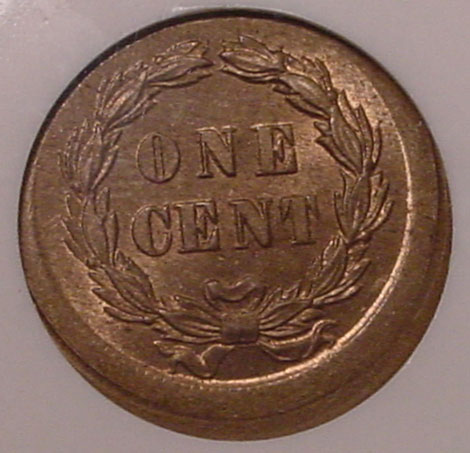
Off-center strikes occur when a planchet (blank coin disc) enters the striking chamber improperly seated, so the dies contact only a portion of the blank. The result is a coin with the normal struck design on one side of the surface while the opposite side retains a crescent of unstruck, plain planchet metal. These errors originate purely from a mechanical misalignment during striking and were not caught before the coin left the mint — likely because production volumes were high and individual coin inspection was minimal.
The value of an off-center strike on an 1860 Indian Head cent is directly proportional to two factors: the percentage off-center and whether the date remains visible. Coins struck 10–20% off-center bring modest premiums. Examples in the 30–50% range, where a significant crescent of blank planchet appears, attract serious error coin collectors. The most prized examples combine dramatic (40%+) displacement with the full date clearly visible at the edge of the struck area — these are considerably rarer since the date digits are often lost with heavy off-centering. A documented AU-58 example at approximately 35% off-center sold for $550; circulated examples with the date visible in the 20–35% range routinely bring $150–$400.
Authentication is essential for any claimed off-center 1860 cent. Some misshapen coins result from post-mint damage (hammering, pressing) rather than genuine off-center striking. Genuine off-center strikes display the characteristic collar curl at the struck edge, natural metal flow patterns consistent with a genuine strike, and no signs of post-mint alteration. PCGS and NGC both encapsulate genuine off-center strikes with a notation of the approximate percentage — certification dramatically improves buyer confidence and liquidity for these dramatic error coins.
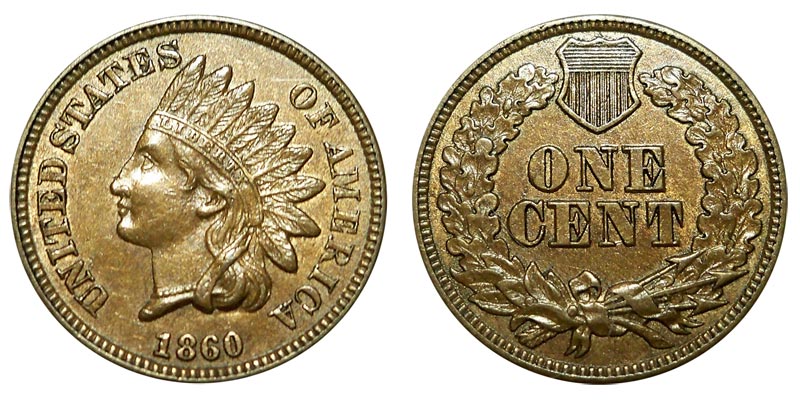
Run the calculator above to get a specific dollar range for your variety + grade combination — it takes under 30 seconds and uses real PCGS/Heritage market data.
Calculate My Coin's Value →Quick-Scan Reference
Values are based on PCGS price guide figures and confirmed Heritage Auctions sales. For a comprehensive in-depth 1860 Indian Head penny identification walkthrough covering every diagnostic feature with photographic references, consult this complete guide to 1860 Indian cent identification and grading. The Pointed Bust row is highlighted in gold; the rarest Snow-6 variety is highlighted in red.
| Variety | Worn (G–VG) | Circulated (F–AU) | Uncirculated (MS60–64) | Gem MS (MS65+) |
|---|---|---|---|---|
| Rounded Bust (common) | $15 – $35 | $50 – $144 | $249 – $750 | $1,650 – $52,800 |
| ⭐ Pointed Bust (FS-401) | $22 – $50 | $60 – $165 | $450 – $1,450 | $3,500 – $37,500+ |
| Snow-5 DDO (LIBE doubling) | $25 – $50 | $70 – $200 | $300 – $900+ | Market — check PCGS |
| 🔴 Snow-6 "Toothpick" (URS-9) | $75 – $150 | $150 – $400 | $400 – $1,200+ | Market — check PCGS |
| RPD Snow-1 (Pointed Bust) | $30 – $65 | $80 – $200 | $350 – $700 | Market — check PCGS |
| Off-Center Strike (20–40%) | $50 – $150 | $150 – $550 | $400 – $1,500 | $1,000 – $3,000+ |
| Proof Strike (est. 1,000 struck) | — | $550 – $1,000 | $1,243 – $5,000 | $5,000 – $24,000+ |
Historical Production Data
The 1860 Indian Head cent marks the second year of the series and the first to feature the oak wreath with shield reverse design. All production occurred at the Philadelphia Mint — branch mints did not strike cents until 1908.
| Issue | Mint | Mint Mark | Mintage | Notes |
|---|---|---|---|---|
| Business Strike (Rounded Bust) | Philadelphia | None | ~19,500,000 est. | ~95% of total mintage |
| Business Strike (Pointed Bust) | Philadelphia | None | ~1,000,000 est. | ~5% of total; earliest 1860 cents struck |
| Proof Strike | Philadelphia | None | est. 1,000 | Struck for collectors; cameo examples scarce |
| Total 1860 Production | Philadelphia only | — | 20,566,000 | Official mintage figure (PCGS / Wikipedia / NGC) |
Historical context: These pennies were struck during one of the most consequential years in U.S. history. Abraham Lincoln won the presidential election in November 1860, and Southern states began seceding from the Union in December. Every 1860 Indian Head cent is a tangible artifact from the final months before the Civil War.
Grading Guide
Accurate grading is the single biggest factor in determining your coin's value. The gap between MS63 ($400) and MS65 ($1,650) is substantial — and the difference between a Fine and VF example is equally meaningful. Here's how to assess your coin's condition.
Heavy overall wear smooths most fine detail. LIBERTY on the headband is weak or partially worn away. Date is readable. The Indian portrait and wreath outlines are visible but flat. Most features blend together. Value: $15–$50
LIBERTY is complete in Fine; bold in EF. Hair details above the ear show progressive sharpness. Cheek shows light wear in AU with luster in protected areas. Feather tips wear first on obverse. Value: $50–$165
No wear from circulation — original luster intact. Lower MS grades show bag marks or abrasions from mint handling. MS63–64 display better eye appeal with fewer contact marks and more uniform luster. Value: $249–$1,450
Exceptional eye appeal, vibrant luster, and near mark-free surfaces. At MS65, any marks require magnification. MS66–67 coins are condition rarities with virtually pristine surfaces and full, blazing satin luster. Value: $1,650–$52,800
Selling Guide
The right venue depends on your coin's grade and variety. A raw circulated example and a PCGS MS67 Pointed Bust should go to very different markets. Here's a breakdown of your best options.
Heritage dominates the 1860 cent auction market with 77% market share. Ideal for PCGS/NGC-certified examples in MS64 and above, Pointed Bust varieties in any uncirculated grade, and proof coins. Their annual FUN and ANA sales attract the deepest pool of specialist buyers. Expect 17.5–20% buyer's premium. Best choice for coins worth $500+.
Active 1860 Indian cent listings run weekly on eBay, making it reliable for circulated and lower uncirculated examples. Check the recently sold prices and completed 1860 Indian cent listings to understand realistic market comps before pricing. Certified coins in PCGS/NGC slabs sell faster and at better prices. Circulated examples ($15–$150) move well as fixed-price listings; higher-grade coins benefit from auction format.
Convenient for quick cash on worn circulated examples. Dealers typically offer 40–60% of retail value for common dates in lower grades. For a Rounded Bust in VF condition ($50–$100 retail), expect $20–$50 from a local shop. Bring it in raw; they'll grade it in-house. Not the best choice for uncirculated coins or varieties — specialists online pay more.
The Flying Eagle and Indian Cent (FEIC) specialist community includes expert attributors who can confirm Snow varieties. Reddit's r/Coins4Sale and r/CoinSales allow direct collector-to-collector sales at near-retail prices with minimal fees. Best for attributed varieties like Snow-5 DDO or Snow-6 Toothpick where a knowledgeable buyer appreciates the premium.
For any 1860 cent you suspect is a Pointed Bust, DDO, RPD, or in MS64+ condition, submit to PCGS or NGC before selling. Standard grading service runs $20–$40 per coin. A certified Pointed Bust MS64 ($1,000–$1,450) versus a raw unknown-variety coin ($200–$400) shows why certification more than pays for itself. PCGS will also attribute FS-401 (Pointed Bust) on the label — a powerful marketing tool for buyers.
Frequently Asked Questions
The 10 most common questions about this coin, answered with verified data.
The free calculator above maps your exact variety, condition, and error combination to a real-market dollar range in under 30 seconds. No signup. No email required.
Calculate My Coin's Value →